

Blog
Bangor Has a Giant Lumberjack, a Riverfront, and a Few Stories Before Dinner
Related Articles

Most towns greet visitors with a welcome sign. Bangor went with a 31-foot lumberjack holding an axe, and the rest of town lives up to that first impression.
So, what is Bangor, Maine known for? The city made its fortune in lumber, inspired Stephen King’s fictional Derry, and boasts a riverfront with centuries of history. Between a giant lumberjack and a blood-red Victorian mansion, there’s enough here to fill an afternoon.
Meet Paul Bunyan, the 31-Foot Greeter
If you’re wondering about the Paul Bunyan statue location, head to Paul Bunyan Park beside the Cross Insurance Center. At 31 feet tall and roughly 3,700 pounds, the red-shirted figure isn’t exactly hard to spot. Nearby parking lots and street spaces give visitors somewhere to stop for a photograph.
The statue debuted on February 12, 1959, for the town’s 125th anniversary. Local artist J. Normand Martin created it in his spare time and reportedly received just $134 from the city. That’s a surprisingly small sum for a statue of this size.
Reputedly the world’s largest Paul Bunyan statue, it also contains a time capsule that has sat in its base since 1959. The capsule will open on February 12, 2084, for the 250th anniversary. Whatever is inside has another few decades to wait.
The Bangor Waterfront Along the Penobscot River
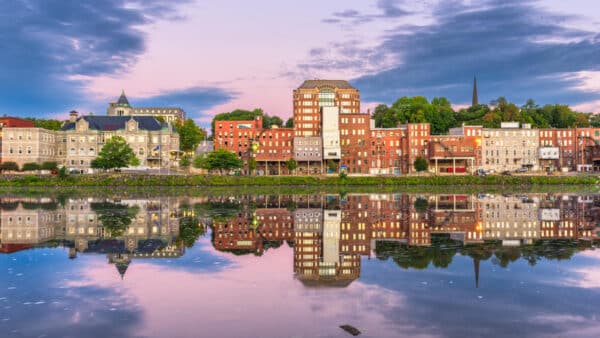
A short walk from Paul Bunyan leads you to the Bangor waterfront. Here, the Penobscot River once carried logs from northern Maine to ships waiting downstream. By the mid-1800s, the area had become one of the world’s busiest lumber ports, earning the nickname Lumber Capital of the World.
The waterfront looks quite different today. A paved riverside path runs for roughly a mile, lined with sculptures, open lawns, and a small craft dock. Food trucks arrive during warmer months, and Maine Savings Amphitheater hosts summer concerts along the riverbank.
Follow the path for views across to Brewer, or continue toward the Kenduskeag Stream Trail. The roughly two-mile trail follows a stream whose name means “eel weir place” in Penobscot. That name reminds us that the area’s history began long before the lumber boom.
Downtown Bangor Has a Darker Side
West Market Square makes a good starting point for exploring downtown Bangor. The Great Fire of 1911 destroyed much of the business district, and many of today’s buildings date to the rebuilding that followed. Independent shops and restaurants now occupy the older storefronts.
The Bangor Historical Society runs walking tours covering architecture, the fire, and local ghost stories. Its Devil’s Half Acre tour explores the saloons that thrived despite Maine’s 1851 Prohibitory Law. Tours generally last about 90 minutes and usually require reservations.
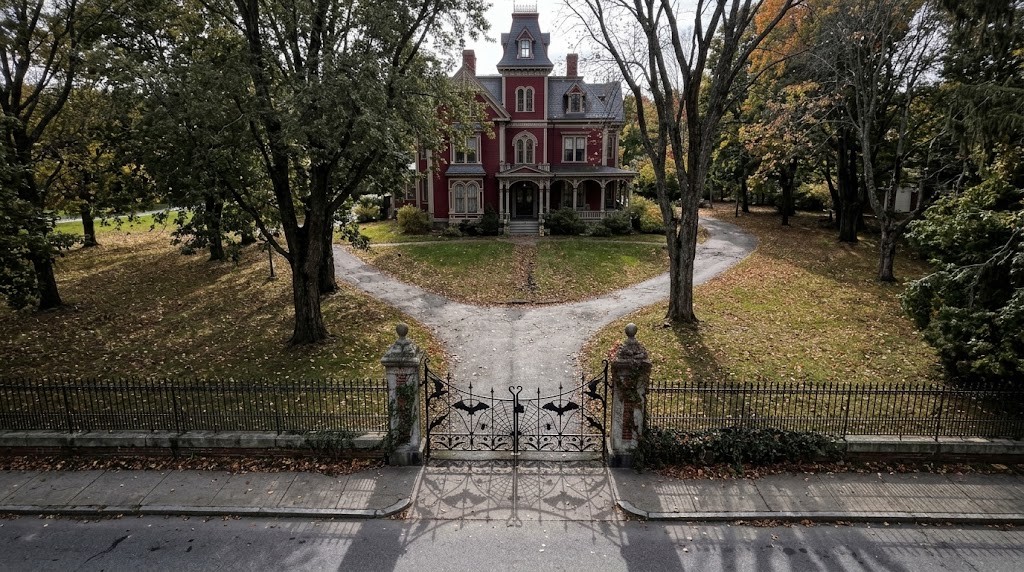
Then there’s Stephen King, whose fictional town of Derry in It draws heavily on his adopted hometown. His former home at 47 West Broadway looks like it belongs in one of his novels: a blood-red Victorian mansion behind wrought-iron gates with bats, spiders, and a three-headed dragon. Even the Paul Bunyan statue gets a sinister role in It, coming to life. The mansion is private property, so please admire it from the public sidewalk.
Lunch, Dinner, and Breweries
After a few hours exploring downtown, lunch sounds like a good idea. Bagel Central on Central Street has sandwiches, bagels, and baked goods, while Paddy Murphy’s serves Irish pub food on Main Street.
If you’re still in town for dinner, 11 Central has a changing menu. You can also head to Blaze on Broad Street for wood-fired dishes and craft beer. Both are worth checking for opening hours, especially early in the week.
Among the Queen City of the East’s breweries, 2 Feet Brewing on Columbia Street has a particularly unusual beer: Barn Burner, a dark saison with roasted jalapeños and ghost peppers. For a beer closer to the water, Sea Dog Brewing sits beside the Penobscot.
Summer Events, Fall Colors, and Winter Coats
The best time to visit Bangor depends on what you want to see. Summer comes with warmer days, longer evenings, and outdoor events. Highs usually sit near 80°F, and evenings drop to the low 60s. That makes it a good season for waterfront walks and historical tours.
Fall brings colorful foliage that usually peaks from late September to mid-October. The historical society hosts annual evening cemetery tours at Mount Hope Cemetery in October, close to Halloween.
Winter draws fewer visitors and is considerably colder, with January highs in the mid-to-upper 20s. Snow depth typically tops out around 25 inches in the second week of February, so roads and sidewalks can get tricky. During the colder months, warm layers help.
Getting There and Getting Around
Bangor International Airport (BGR) sits on Godfrey Boulevard, about a mile from I-95 Exit 184. Union Street (Route 222) leads from that area toward downtown, a few miles away. The trip from BGR is relatively short, though your hotel’s location will determine where you start your visit. When you land with luggage, a stop at your hotel might make sense before exploring.
Once you’re in downtown Bangor, several attractions sit within walking distance of each other. The Paul Bunyan statue, the riverfront, and West Market Square fit neatly into one stroll. Stephen King’s former home then makes a short detour from the main streets. A visit covering several parts of the city also means considering the distances between stops, particularly beyond the central downtown streets.
Taking a Story Home
Beyond the practicalities, this town rewards curiosity more than a packed itinerary. An unexpected detail might catch your attention and turn into the story you tell when you get home. And if it grows slightly more dramatic with every retelling, perhaps you’ve picked up some local storytelling habits.
Share this:


